WHAT ARE BAT HOUSE KITS?
Bat house kits give you a simple way to eliminate your bug problem. You may be thinking, 'What do bats have to do with insect repellent?' Read and find out.


Bats are among the hardest-working animals in any backyard: a single bat can take thousands of insects in a night, and several North American species will readily move into a well-placed habitat. These guides cover where bats live and roost, what they eat, how they get through winter, and how to choose, mount and maintain a bat habitat so a colony actually settles in.
Almost every bat in North America and Europe is an insect eater. A night's hunting brings in moths, beetles, mosquitoes, midges, flies and a long list of garden and crop pests, all taken on the wing using echolocation. Other species around the world feed on fruit, nectar or pollen and do real pollination work. Our guide to what bats eat goes into the detail.
No. Every bat species can see, and several see well in low light. The myth comes from echolocation: bats send out high-frequency calls and read the returning echoes to map insects, branches and buildings in complete darkness. Sight and echolocation work together, with vision handling longer distances, landmarks and light levels at dusk while echolocation does the close-range hunting.
Insects vanish in the cold months, so bats either hibernate or migrate. Hibernating species settle into caves, mines, rock crevices and other cool, humid, stable spaces and drop their body temperature for weeks at a time. Others travel south to warmer feeding grounds. A backyard habitat is a summer roost, so expect your colony to leave in autumn and return in spring.
Bats roost wherever they find a warm, dry, undisturbed gap: under loose tree bark, inside hollow trunks, in rock crevices and caves, in bridge joints, barns and building cavities. Summer maternity colonies want heat and stability; winter sites want cool and damp. As old trees and outbuildings disappear, a mounted habitat replaces roosting space that has been lost. Bats and people share ground more comfortably than most assume.
Bats avoid people. They do not attack, they are not aggressive, and a healthy bat wants nothing to do with your patio or your dog. Two sensible habits cover it: never handle a bat with bare hands, and keep pets away from any bat found on the ground, because a grounded bat is usually sick or injured. Keeping cats indoors at dusk helps both sides.
Rabies in bats is uncommon, and the overwhelming majority of bats you will ever see are healthy. Transmission needs a bite or a scratch, not proximity, so never touching a bat with bare hands removes nearly all of the risk. If you are bitten or scratched, or you wake up with a bat in the room, contact a doctor and your local public health service straight away and follow their instructions.
You will see the figure of 1,000 mosquitoes an hour quoted everywhere. It comes from a laboratory feeding trial rather than from a backyard, and wild diets are far broader: moths, beetles, midges, flies and crop pests usually make up more of a night's meal than mosquitoes do. Bats are genuinely effective insect control. Treat that headline number as a ceiling, not a nightly average.
Get the fundamentals right and the bats find you. Mount high, in direct sun, on a pole or a building rather than a tree, within reach of a water source if you have one, and then leave the habitat undisturbed. Skip garden pesticides so there is something to hunt. Our full guide on how to attract bats walks through every factor in order.
Patience is part of this. Most habitats attract their first residents within two to six months, usually in spring or early summer when bats are scouting for a season roost. Larger multi-chamber habitats can take two to three years to fill, and that is normal rather than a fault. If nothing has arrived by the second season, revisit height, direction and sun exposure before relocating.
Mount at 15 feet (4.5 m) or higher, facing south to south-east so the habitat warms early and holds that heat through the day. Direct sun matters more than almost anything else: aim for six or more hours of it. Keep the drop-out flight path underneath clear. Full detail sits in our guides on hanging a bat habitat and where to mount one.
You can, though a pole or a building wall works better. Trees shade the habitat, branches block the drop-out flight path, and predators climb. Tree-mounted habitats take roughly twice as long to attract a colony. If a tree is your only option, pick the sunniest and most open one you have, mount as high as you safely can, and keep at least 20 feet (6 m) of clear space from surrounding branches.
Chambers set both capacity and the range of temperatures a colony can choose from. One chamber suits a small bachelor group and a first habitat. Two chambers let bats shift between a warmer and a cooler side as the day moves. Three chambers hold a full maternity colony and buffer temperature swings best. Compare all three in our chamber guide.
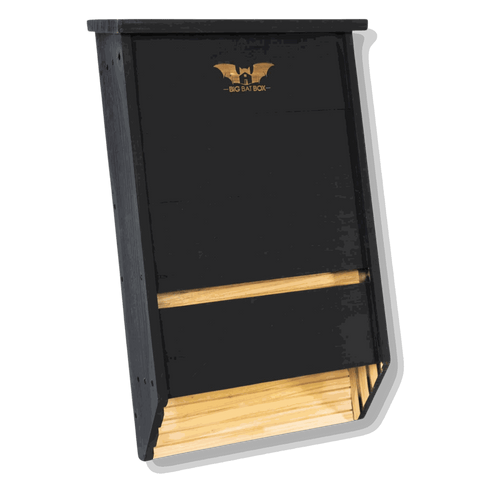
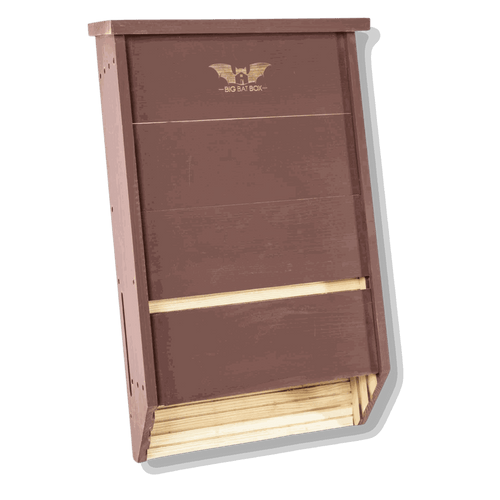
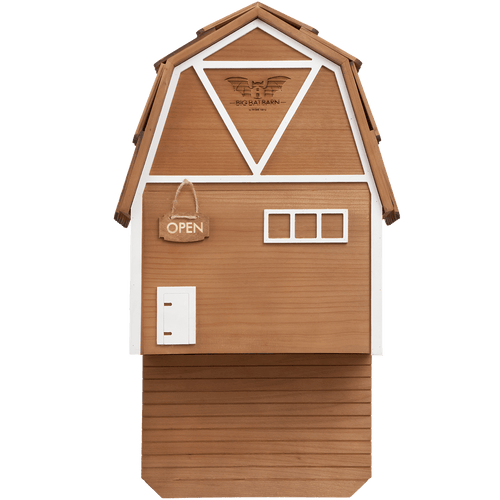
Handcrafted cedar habitats, built around how bats actually roost — mount one, leave it alone, and let the colony find it.
$159.90
$159.90

$159.90

$89.95
$89.95

$42.99

$42.99

$42.99