

Are Squirrels Nocturnal? When They're Actually Active
Grey, red, and fox squirrels are active by day with peaks near sunrise and late afternoon; night noises are more likely a flying squirrel.


Squirrels are the wildlife most backyards already host, whether or not anyone planned for it. Knowing what they eat through the year, where they nest, and how they behave between seasons makes them straightforward to support — and easier to keep away from the bird feeder. These guides cover squirrel species, diet, nesting behaviour, and how to choose between a squirrel habitat and a feeder.


Tree squirrels are opportunistic foragers. The bulk of the diet is nuts, seeds, tree buds, bark and fungi, with fruit and the occasional insect or egg when the chance appears. Autumn is spent caching food for winter rather than eating it. If you are feeding them, unsalted nuts in the shell and seed mixes work well — see our year-round feeding guide.
Tree squirrels — grey, red and fox squirrels — do not hibernate. They stay active all winter, living off cached food and sheltering in tree cavities or nest boxes during severe weather, sometimes for several days at a time. Ground squirrels and chipmunks are the ones that genuinely hibernate. This is why winter shelter matters: an active animal still needs somewhere dry to wait out a storm.
Most wild tree squirrels live around five to six years. First-year mortality is high, so the average across all births is considerably lower. Squirrels that survive their first winter tend to do much better from there. Reliable shelter and a steady food supply through the leanest months are the two things that move those odds.
Two options. A drey is the leaf-and-twig nest wedged into a tree fork; a den is a hollow cavity inside a trunk or branch. Cavities are warmer and are preferred for winter and for raising young, but mature hollow trees are scarce in most gardens. A nest box does the same job — that is the gap a squirrel habitat fills.
No. Grey, red and fox squirrels are diurnal, with activity peaking shortly after sunrise and again in the late afternoon. Flying squirrels are the exception — they are genuinely nocturnal, which is why most people never see them despite living alongside them. Movement in the roof after dark is more likely a flying squirrel than a grey.
Hawks, owls, foxes, snakes and domestic cats are the main predators, and pressure from the air is constant in open gardens. This matters if you host more than one species: owls take squirrels, so an owl habitat and a squirrel habitat belong well apart rather than side by side.
Very rarely. Small rodents such as squirrels, chipmunks and mice are almost never found to be infected with rabies, and they are not known to have passed it to a person. They are still wild animals and will bite if handled or cornered, so feed at a distance and never hand-feed. Any bite from any wild animal should be seen by a doctor.
Grey squirrels usually breed twice a year — once in late winter, roughly February to April, and again in midsummer. Litters are typically two to four young, born blind and dependent, and they stay in the nest for around ten weeks. Avoid opening or cleaning a nest box during those windows; late autumn is the safe time for maintenance.
Three things work together: mount the feeder at least 10 feet (3 m) from any launch point such as a fence, branch or roof; fit a baffle above and below it; and give the squirrels a food source of their own a good distance away. Diverting them usually works better than trying to exclude them — see the squirrel feeder guide.
A feeder supplies food; a habitat supplies shelter and a place to raise young. If squirrels already visit and you want to watch them, start with a feeder. If you want them to settle rather than pass through — particularly where there are few mature trees — the habitat is what changes the outcome. Our comparison guide covers both.
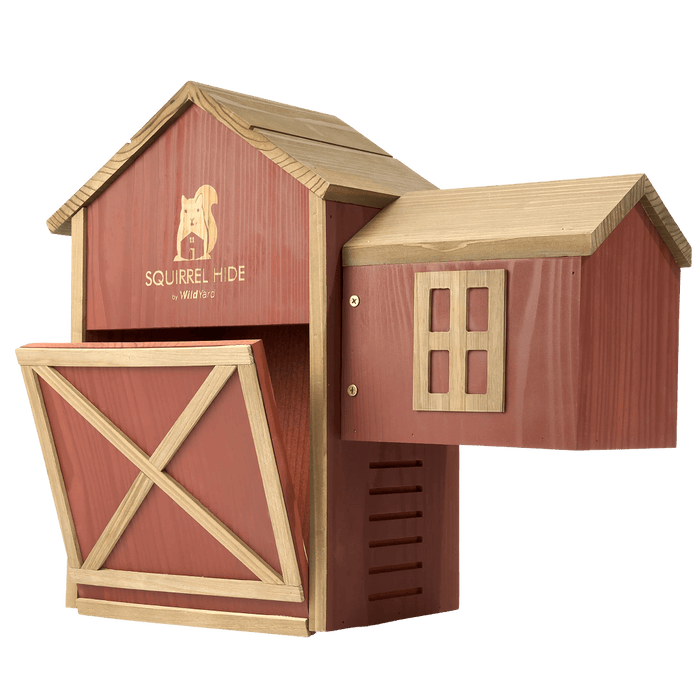
Handcrafted cedar, designed for the species. One habitat doing two jobs — shelter through winter, and a feeding station you can actually watch.
$95.00
View the squirrel habitat